






Search the Community
Showing results for tags 'OTF Premium'.
Found 746 results
-
Three Texas Longhorn alums will be on the field when the New England Patriots visit the Seattle Seahawks to kick off the 2026 NFL season on Wednesday (7:20 p.m., NBC). Michael Dickson and Byron Murphy II ended the 2025 season by helping the Seahawks top the Patriots and Brenden Schooler in Super Bowl LX. The return bout at Seattle’s Lumen Field will be highlighted by the Seahawks raising the franchise’s second Super Bowl championship banner. Dickson and Murphy are the latest Longhorns to be a part of a Seahawks Super Bowl team. Seattle has had at least one Texas product on its roster for each of the franchise’s four trips to the Super Bowl, with Dickson and Murphy joining D.D. Lewis (Super Bowl XL), Marcus Tubbs (XL) and Earl Thomas (XLVIII and XLIX). While Dickson and Murphy were drafted in 2018 and 2024, respectively, Schooler is one of nine former undrafted Longhorns on a 53-man roster entering Week. Ethan Burke is the latest member of the group after making the Baltimore Ravens’ 53-man roster, joining Schooler, Isaiah Bond (Cleveland Browns), PJ Locke III (Dallas Cowboys), Lil’Jordan Humphrey (Denver Broncos), Malcolm Roach (Broncos), Cameron Dicker (Los Angeles Chargers), Poona Ford (Los Angeles Rams) and Andrew Beck (New York Jets). — Trey Moore (Miami Dolphins), Jaylan Ford (New Orleans Saints) and DeShon Elliott (Pittsburgh Steelers) will begin their respective seasons on injured reserve with designations to return at some point during the season. Unfortunately, Alfred Collins won’t be joining them, with his impending trip to injured reserve for the San Francisco 49ers marking the official end of his second NFL season. Collins suffered a torn patellar tendon during the team's practice in Australia on Tuesday ahead of the 49ers’ season opener against the Los Angeles Rams on Thursday (7:35 p.m., Netflix). The No. 43 overall pick in the 2025 draft, Collins played in 16 regular-season games for the 49ers as a rookie and saw action in both of the team’s playoff games. While Collins is the only former Texas player on the 49ers roster for lifetime Longhorn Kyle Shanahan, the Rams’ roster features five products from the Forty Acres: Ford and Jordan Whittington on the active roster, Matthew Caldwell on injured reserve and Jack Bouwmeester and Bill Norton on the practice squad. — The number of Longhorns in the NFL entering Week 1 is 53. That includes 43 on 53-man rosters, six on practice squads and four on injured reserve (Caldwell was placed on season-ending injured reserve when the Rams cut their roster down to 53 players). The number of Texas products on the practice squad is the same as it was after cutdown. The players, however, have changed. The Kansas City Chiefs released Cole Brevard after waiving him on cutdown day and bringing him back to the practice squad. Brevard worked out for the Buffalo Bills last Friday, but the team didn't sign him. Thankfully, D’Shawn Jamison helped the numbers hold steady. On the same day Brevard worked out for the Bills, the Arizona Cardinals added Jamison to their practice squad, giving the Cardinals three former Longhorns in the organization (Hayden Conner and Devin Duvernay are on the 53-man roster). *** Longhorns in the NFL in Week 1: 53 Longhorns on the 53: 43 Practice Squad: 6 Injured Reserve: 4 *** Arizona Cardinals (3): Hayden Conner, Devin Duvernay, D’Shawn Jamison* Atlanta Falcons (2): Bijan Robinson, Cameron Williams Baltimore Ravens (1): Ethan Burke Carolina Panthers (2): Jonathan Brooks, Ja’Tavion Sanders Chicago Bears (3): Roschon Johnson, Christian Jones*, Malik Muhammad Cincinnati Bengals (1): Jack Endries Cleveland Browns (1): Isaiah Bond Dallas Cowboys (2): PJ Locke III, Demarvion Overshown Denver Broncos (5): Jahdae Barron, Sam Ehlinger, Lil’Jordan Humphrey, Brandon Jones, Malcolm Roach Green Bay Packers (2): Matthew Golden, Barryn Sorrell Jacksonville Jaguars (1): Quinn Ewers Kansas City Chiefs (1): Xavier Worthy Los Angeles Chargers (1): Cameron Dicker Los Angeles Rams (5): Jack Bouwmeester*, Matthew Caldwell#, Poona Ford, Bill Norton*, Jordan Whittington Miami Dolphins (3): DJ Campbell, Trey Moore#, Michael Taaffe New England Patriots (1): Brenden Schooler New Orleans Saints (3): Kelvin Banks Jr., Vernon Broughton, Jaylan Ford# New York Jets (4): Andrew Beck, Adonai Mitchell, Joseph Ossai, T’Vondre Sweat Philadelphia Eagles (4): Jaydon Blue*, Jake Majors*, Andrew Mukuba, Moro Ojomo Pittsburgh Steelers (1): DeShon Elliott# San Francisco 49ers (1): Alfred Collins Seattle Seahawks (2): Michael Dickson, Byron Murphy II Tennessee Titans (2): Gunnar Helm, Anthony Hill Jr. Washington Commanders (2): Samuel Cosmi, Charles Omenihu * — Practice Squad # — Injured Reserve
-
AUSTIN, Texas — It’s time to revisit On Texas Football's “One Burning Question,” where we ask a question about the Texas Longhorns heading into a game. Entering Saturday’s 24-23 win over No. 1 Ohio State, our burning question was: Can the Longhorns win the line-of-scrimmage battle against the Buckeyes? They did. In emphatic fashion. Winning in the trenches played, arguably, the most significant role in the program’s first home victory over the Associated Press’ No. 1-ranked team since a 23-20 win over SMU on Nov. 4, 1950. From the time Texas took possession after an Ohio State punt with 5:47 to go in the third quarter, the Longhorns had a plus-28 play differential over the Buckeyes. Forty of the Texas offense’s 83 snaps came on the unit’s last three possessions: touchdown drives of 15, 13 and 12 plays, respectively. Even though Arch Manning sparked the first two scoring marches with a pair of fourth-down conversions (a desperation throw while on the move to Emaree Winston and a dart to Emmett Mosley V), Steve Sarkisian put the 20-point comeback on the shoulders of Kyle Flood’s much-maligned offensive line. Including the 34 yards Manning picked up on the five times he called his own number, the Longhorns toted the rock 22 times for 96 yards on their last three drives, including Hollywood Smothers’ over-the-top, game-winning 1-yard touchdown with 25 seconds left on the clock. The 22 late-game carries accounted for more than half of Texas' 41 official rushing attempts. After rushing for 140 net yards (3.4 yards per attempt), the Longhorns improved to 23-2 in 40-carry games under Sarkisian. Texas’ only two games with 40 or more official carries last season came against UTEP (56) and Sam Houston (41). The Ohio State game was the Longhorns' first with 40 or more official rushing attempts against a Power Four opponent since a 48-carry, 292-yard outing in a 2024 College Football Playoff first-round win over Clemson. Whether it’s been a lack of trust in the position groups responsible for making the running game go (the offensive line, running backs or both) or a desire to hunt big plays through the air, Sarkisian has, more often than not, abandoned the run in big games. That wasn’t the case against the Buckeyes. The belief in the ground attack can be linked to Sarkisian’s trust in the offensive line and running backs after both groups underwent massive offseason overhauls. The line is playing well together, Sarkisian said Monday while recapping the win over Ohio State and looking ahead to No. 1 Texas’ non-conference finale against UTSA on Saturday (7 p.m., SEC Network+), because of Connor Robertson’s veteran presence at center. While acknowledging that Robertson’s experience helps communication flow better on game day, Brandon Baker and Trevor Goosby have a full season as starters under their belts and seasoned transfer portal acquisitions Melvin Siani (859 snaps at Wake Forest last season, according to Pro Football Focus) and Dylan Sikorski (444 snaps as a sophomore at Oregon State) have exceeded expectations since joining the program. “I think there's a lot of experience and I think they're just working cohesively well together, but what I liked was the physicality that they played the game with,” Sarkisian said. “They moved the line of scrimmage and they created running lanes.” For their part, Smothers (74 yards and two touchdowns on 21 carries) and Raleek Brown (10 carries for 54 yards), “didn’t go down on contact," Sarkisian said. According to PFF, Smothers and Brown combined for 80 rushing yards after contact, with nine missed tackles forced. between them. “We made guys miss; we ran through safeties,” Sarkisian said. “They were physical.” The running back group’s toughness translated to much-needed pass protection for Manning, who was pressured on just 11 of his 44 dropbacks, according to PFF. Manning was the sixth-most-pressured quarterback in FBS last season (165 total pressures, on 35.6 percent of his dropbacks), with Ohio State pressuring him on 14 of 34 dropbacks (41.2 percent) in last season’s 14-7 loss in Columbus. The Longhorns flipped the script in Austin. While Texas kept Manning relatively clean, Will Muschamp’s in-game adjustment to play man coverage against Jeremiah Smith and put another defender in the box to bolster the run defense paid off with a winning effort against the run (94 yards and three yards per attempt by the Buckeyes, who didn’t have a run from scrimmage longer than 11 yards) and more consistent, effective pressure on Julian Sayin. After the Longhorns only pressured Sayin on five of his 20 dropbacks last season, Muschamp’s defense pressured the 2025 Heisman Trophy finalist on 15 of his 36 dropbacks (41.7 percent), mirroring what Indiana (pressured Sayin on 12 of 34 dropbacks in the Big Ten championship game) and Miami (pressured Sayin on 17 of 40 dropbacks in the Cotton Bowl) did last season in wins over the Buckeyes. When Texas faced critical downs and needed a defensive player to step up and make a play, Alex January, Hero Kanu, Maraad Watson and Ian Geffrard won must-win battles at the point of attack. Muschamp went with heavier fronts featuring three and sometimes four tackles on the field, the latter being the case when January led the charge to stuff Ja’Kobi Jackson on fourth-and-2 from the Longhorns’ 13-yard line early in the second quarter. Winning the rushing yardage battle, providing adequate protection for Manning and bringing the heat on Sayin more than Ryan Day and Arthur Smith wanted (Sayin overthrew Devin McCuin on a potential game-clinching touchdown in the third quarter, with Justin Cryer forcing a hurried throw as an unblocked rusher coming off the edge) added up to the Longhorns winning the trench battle and the game. They won the way Sarkisian hoped they could against elite opponents after spending the offseason trying to get Texas to play with more of a physical edge by putting the fulcrums of the running game through competitive, intense inside-run periods in practice. With the trench battles sharpening both lines of scrimmage, Texas delivered when and where it mattered against the No. 1 team in the country. “As a coach, you get what you emphasize, right? And we've been emphasizing being a more physical football team, being a more physical offensive team and running the football when they know you're going to run the football and having the ability to do that and having the ability to have confidence to call it that way,” Sarkisian said. “At the end of that game, when we were down there first-and-goal, it was like, 'We're running it, man.' And they knew we were running it. There wasn't a secret. We weren't going to call a bootleg or a tight end corner route or something. The ability to get that ball in the end zone is gratifying as a coach that your players have bought into what you're asking of them to get accomplished."Happy Game Day! We'll post updates here throughout the day. This will eventually turn into the live updates thread at kickoff. 🤘 PREGAME -- James Johnson, Xavier Filsaime, Nic Robertson, Kaden Scherer, Elijah Ali, Markus Boswell did not warm up. -- Derrek Cooper did warm up, but from the back of the RB line. FIRST QUARTER 12:04 -- Connor Hawkins 26-yard field goal ... Ohio State 3, Texas 0 5:39 -- 8-yard TD run by Ja'Kobi Jackson ... Ohio State 10, Texas 0 SECOND QUARTER 5:42 -- 37-yard FG from Gianni Spetic ... Ohio State 10, Texas 3 1:41 -- 30-yard FG from Connor Hawkins ... Ohio State 13, Texas 3 0:10 -- 19-yard TD connection between Julian Sayin and Jeremiah Smith ... Ohio State 20, Texas 3 FIRST HALF SYNOPSIS Think of every worst-case scenario for the Longhorns, and it happened. From the opening play that saw Raleek Brown fumble the screen pass Steve Sarkisian typically loves to throw to Ryan Wingo open games, to Cam Coleman tipping a diving catch into Ohio State defensive back Jaylen McClain's hands for an interception, to Ryan Wingo dropping a wide open touchdown pass, to Arch Manning taking two sacks, to UT failing to convert on a 4th and 2 that saw Wingo get tackled behind the line of scrimmage on a reverse. It was nothing but nightmare material for the Longhorns heading into the locker room. On the opposite side of the field, Ohio State more often than not took advantage of Texas' miscues, scoring 10 points off turnovers. Star Buckeyes wide receiver Jeremiah Smith crossed the century mark in the first half, catching six passes for 110 yards and a touchdown, surpassing his combined total over the last two seasons against Texas in two quarters. Sayin completed 12 of 16 passes (75%) for 192 yards and a score. The Longhorns were unable to get much pressure on Sayin until late in the second quarter with Lance Jackson and Colin Simmons getting home on pass rushes. Texas' playmakers have failed to show up and the Longhorns have a 17-point deficit with the ball going to the Buckeyes first in the third quarter. HALFTIME THIRD QUARTER 8:09 -- 48-yard Connor Hawkins FG ... Ohio State 23, Texas 3 FOURTH QUARTER 14:19 -- 3-yard TD pass from Arch Manning to Ryan Wingo ... Ohio State 23, Texas 10 7:14 -- 1-yard TD run by Hollywood Smothers ... Ohio State 23, Texas 17 0:25 -- 1-yard TD run by Hollywood Smothers ... Texas 24, Ohio State 23 FINAL SYNOPSIS The Will Muschamp defense bowed up in the second half, holding the Buckeyes to just 129 yards and 3 points. After a sluggish start out of the locker room, the Longhorns leaned on their rushing attack, with Hollywood Smothers (3.5 per carry) and Raleek Brown (5.4 per carry) leading the way, which eventually opened up the passing game that included a 3-yard touchdown pass to Ryan Wingo and then multiple drive-extending plays to Emaree Winston and Emmett Mosley. Texas drew it to within six late in the fourth, 23-17, before Ohio State missed a 45-yard field goal on the ensuing drive. Texas capitalized on the miss with a long, drawn out drive down the field, culminating in a one-yard Smothers touchdown that tied the game, before Gianni Spetic gave UT a one-point lead with the extra point. The Longhorns defense was able to withstand the final 25 seconds from the Ohio State offense, with Graceson Littleton intercepting a desperation heave and giving UT the win. Final ... Texas 24, Ohio State 23Just walked in the door from the game. Think I lost about 15 pounds in water weight today walking around. Not sure I’ll be able to sleep tonight (or this morning at this point). Figured I’d share a few thoughts from the game while I’m still wired. — I’ve never seen anything like that, and certainly not at DKR. I thought of the 2004 comeback against Oklahoma State, but this was different. This was a Texas team down 20 points to the No. 1 team in the country in the second half. Chris Hummer of 247Sports pulled a great stat: entering tonight, teams were 0-223 that were down by 17-plus to the No. 1 team in the country since 2003. Now it’s 1-223. — It truly was the tale of two halves. Texas’ playmakers were nowhere to be found through the first two quarters, with one of the flukiest interceptions you’ll ever a see, a wide-open touchdown dropped by Ryan Wingo, the Raleek Brown fumble, etc. Credit the staff and players for halftime adjustments because the defense clamped down the OSU offense in the second half, especially on 3rd downs. The Buckeyes converted 5 of 8 on 3rd downs in the first half, compared to 1 of 6 in the second half. Texas actually dipped in 3rd down conversation percentage in the second half, but, of course, went 2 for 2 on 4th downs. — I can’t get over the poetic finish to this game. Running the ball and converting in the red zone. In beating the No. 1 team in the country, Texas also answered questions people have had about Steve Sarkisian and the Texas offense for several years. The Longhorns averaged 4.2 yards per carry on the ground in the fourth quarter. — Hollywood Smothers, Emmett Mosley, Emaree Winston, and Spencer Shannon all get helmet stickers for their performances on offense. Smothers has next-level shiftiness, maybe too much at times, but ran the ball effectively and with some punch. Mosely and Winston had big catches and Shannon had some huge run blocks. Also props to Raleek Brown for stepping up with some key runs late. He averaged — The Texas DBs answered the call in the second half. Bo Mascoe had his Longhorns coming out party. Julian Sayin was just 2 for 7 targeting Jeremiah Smith in the second half. In fact, Texas held Sayin to the lowest completion percentage of his career (53.1). — Way to keep your head on a swivel Kade Phillips and Cam Coleman jumping on fumbles. Texas fumbled four times and only lost one. Probably Coleman’s best contribution on the night. — The 4th and 9 across his body throw is possibly the most clutch play I’ve seen from Arch Manning. That or the 4th and 6 to Emmett Mosley a little while later. — Speaking of Mosley, he’s the most sure-handed WR on the team. Texas was wise to start targeting him more in the second half because he changed the trajectory of the game. Big night for the Mosley family. His brother, Trent, had a touchdown grab in USC's win over Louisiana. — When one of the toughest players on your team is your quarterback, you’re in good shape. That's what Arch Manning is. As one media member noted in the press box tonight, “that kid is a tough SOB.” — I suspect we’ll see some really strong grades from the Texas OL on Sunday morning’s PFF report. They were really good, particularly in pass pro. — For as surgical as Julian Sayin-Jeremiah Smith felt in the first half, the fact that OSU only scored three points in the second half is a huge credit to Will Muschamp and the halftime adjustments. The pass rush came to life, and Texas started to affect Sayin more as the game wore on. That certainly affected the accuracy dip. — Feel like I’m just rambling now but enjoy this one. It was important for so many reasons that we’ll continue to dissect on OTF.It didn’t matter if it was by one point or 100. It doesn’t matter that it took a horrendous, miserable first half to set up the program’s biggest comeback win since 2007. It doesn’t matter that Texas still has to navigate a brutal SEC schedule before thinking about returning to the College Football Playoff. The Longhorns needed Saturday’s 24-23 win over No. 1 Ohio State in the worst way. To get the scarlet-and-gray monkey off their back For Steve Sarkisian, who’s won four of his last five games against top-10 opponents, to change the narrative about him in big games. For Arch Manning, who’s yet to lose a start at home, to prove that he’s not the same quarterback who looked miles away from being a franchise player in Columbus last season. For Texas to prove that it's ready to kick in the door to national championship contender status after knocking on it in 2023 and 2024. The Longhorns overcame a 23-3 third-quarter deficit to win, scoring the game’s last 21 points. After stumbling, fumbling and falling over itself in the first half, Texas flipped the script in the second half, outgaining Ohio State by 107 yards (239-132), winning the battle on the ground (103-46) and executing critical situations at an elite level (5-for-9 on third down, 2-for-2 on fourth down and 3-for-3 in the red zone with three touchdowns). Sarkisian and the Longhorns have a lot to fix. That work can start on Sunday. Playing the Buckeyes close wasn’t going to be good enough. Texas made the plays it needed to make to position itself for an epic comeback. And now that it’s done, the Longhorns cleared a huge hurdle toward grabbing the next rung in college football’s hierarchy. *** Kade Phillips and Cam Coleman deserve huge kudos for the comeback. Phillips recovered a punt that bounced off Ryan Niblett’s face mask in the third quarter. With a 23-3 lead, an Ohio State recovery deep in would’ve paved the way for a Buckeye rout. On the offense’s ensuing possession, Coleman pounced on an Emmett Mosley V fumble, which would’ve wiped out a third-and-9 conversion in the Ohio State red zone. The comeback wouldn’t have been possible without those two plays. The mistakes Texas made time and again in the first half gave way to timely clutch moments down the stretch. *** Colin Simmons made two game-changing plays in the second half that won’t show up in the box score. On third-and-4 from the Longhorns’ 27-yard line, Simmons pressured Julian Sayin, rushing a throw down the sideline intended for Jeremiah Smith (a well-defended play by Bo Mascoe) that fell incomplete. The next snap was Connor Hawkins’ 45-yard field goal that went wide left. On Ohio State’s last drive, Simmons forced a holding call (Austin Siereveld was in the game at right tackle after Phillip Daniels left earlier with an apparent injury), which put the Buckeyes 85 yards from the end zone with 17 seconds on the clock and no timeouts. *** The Texas offensive line came up big in the second half. Kyle Flood’s group reestablished the line of scrimmage in critical situations; two of the first downs the Longhorns gained on their game-winning drive were on the ground, which doesn’t include Hollywood Smothers going over the top for the winning score with 25 seconds left in regulation. *** Will Muschamp’s defense was up against in the first half. The offense’s inability to put together drives led to awful field position; 31 of Ohio State’s 37 first-half snaps (83.8 percent) were in Texas territory. With the Longhorns getting their act together on offense, the Buckeyes only ran 10 of their 26 second-half snaps (38.5 percent) on Texas’ side of the field. Texas winning the play differential in the second half played a big role in the Longhorns limiting Ohio State to 5.1 yards per play (6.5 in the first half) and a 1-for-6 mark on third down (5-for-8 in the first half). *** The All-22 film of Manning’s night will be picked apart in the coming week. Manning's first two and a half quarters were a worst-case scenario for any quarterback in a big game. When he wasn’t missing reads or open windows, Manning’s receivers let him down. With a comfortable lead, Matt Patricia dropped defenders into coverage to deny him deep shots. Thankfully, things changed on the Longhorns’ last three possessions and by the time he ripped a second-and-7 completion to Mosley for 19 yards down the Ohio State 1-yard line with 1:19 to play, he was locked in and dealing. Manning went 8-for-11 for 67 yards and a touchdown on the second play of the fourth quarter (a 3-yard toss to Ryan Wingo). Manning's second half (16-for-23 for 136 yards) was much better than his first two quarters (7-for-14 for 60 yards and an interception). Manning's two most important completions came on fourth down: a fourth-and-6 scramble that resulted in a 9-yard completion to Emaree Winston en route to the first touchdown of the game and a 12-yard strike to Mosley on fourth-and-6 to keep a 13-play, 72-yard touchdown drive alive. Even though Smothers (21 carries for 74 yards and two touchdowns) and Raleek Brown (54 yards on 10 carries) helped the offense grind out long drives in the second half, Manning wasn’t a bus driver on Saturday. In program history, only Colt McCoy (2006 over Texas Tech and 2007 over Oklahoma State) and Vince Young (2004 over Oklahoma State) quarterbacked Texas to bigger comeback wins than the one Manning engineered over the Buckeyes. It wasn’t always pretty, but Manning executed when it was do-or-die down the stretch, which is what the great ones do. *** It’s going to take a minute to process everything that happened on Saturday. What felt like another chapter in the ongoing saga of the Longhorns failing to deliver when sharing the stage with Ohio State instead became an epic comeback, capping an unforgettable week on the Forty Acres. Instead of another version of Texas’ previous losses to the Buckeyes or Georgia, the Longhorns went back into their bag from last year’s comeback win over Texas A&M. Down at halftime after a mostly listless first half against a top-five opponent, Texas dug deep and gutted out a victory the hard way. Thankfully, that’s the performance the Longhorns replicated.CFB Week 2 Thread Starting this early this week with 19 SMU at Florida State I know it's technically a "week 1"game due to holiday, but I'm calling in Week 2 with it being a Monday gameIt’s time to tackle “One Burning Question,” an On Texas Football in-season feature where we’ll examine a question facing the Texas Longhorns entering a game. On Sunday, we’ll revisit the question to see whether Steve Sarkisian’s team answered it successfully. This week, with No. 4 Texas hosting No. 1 Ohio State on Saturday (6:30 p.m., ABC), the question is: Can the Longhorns win the line-of-scrimmage battle against the Buckeyes? In the back-to-back losses the Longhorns have suffered at the hands of the Buckeyes, rushing yards have only told part of the story in the trenches. When Ohio State ended Texas’ 2024 season with a College Football Playoff semifinal win in the Cotton Bowl, the Buckeyes out-rushed the Longhorns by 23 yards, 81-58. Last season, Texas took advantage of Matt Patricia deploying more resources to defend Arch Manning and the passing game, racking up 166 yards on 37 attempts and leaving Columbus with a plus-89 edge on the ground in a loss. Rushing yardage isn’t the only way to determine which team wins in the trenches. Those other areas, unfortunately, have been problematic for the Longhorns against the Buckeyes. Fourth down, for instance, was a consequential down in the first two rounds of a college football blue-blood trilogy. The Buckeyes are 2-for-3 on fourth down in their last eight quarters against Texas. One of those conversions was an 18-yard run by Will Howard on fourth-and-2 in the fourth quarter of the Cotton Bowl, which kept a 13-play, 88-yard touchdown drive alive. The other came in last year’s game, when CJ Donaldson scored the first touchdown on a 1-yard run that capped a 13-play, 80-yard drive. The Longhorns, meanwhile, went 1-for-3 on fourth down in the Cotton Bowl, with one failed attempt resulting in Jack Sawyer’s game-clinching 83-yard scoop-and-score. Texas was 1-for-5 on fourth down in last season’s loss, including a failed quarterback sneak on fourth-and-goal at the 1-yard line, a fourth-quarter drive that stalled in the red zone and the offense’s last possession, which ended with Manning finding Jack Endries under duress two yards short of the line to gain on fourth-and-5 from midfield. Clearly, Ohio State’s pressure on Manning last season and Quinn Ewers in the Cotton Bowl significantly tipped the scales in the Buckeyes’ favor. The Longhorns pressured Howard on 11 of his 36 dropbacks (a 30.6 percent pressure rate, according to Pro Football Focus) in the CFP semifinal, resulting in an interception and two sacks. Ohio State turned the heat up a few more notches on Ewers, who was pressured on 20 of 44 dropbacks (45.5 percent pressure rate). Ewers was 6-for-15 throwing the football when pressured and was sacked four times. Texas only pressured Julian Sayin on five of his 20 dropbacks last season (the Buckeyes played with heavier personnel and designed a game plan that protected Sayin from making a potential game-changing mistake in his first start), with no negative plays to show for the few times the Longhorns moved the Heisman Trophy finalist off his spot. Manning was pressured on 41.2 percent of his dropbacks (14 of 34), and while his ability to get away from the rush resulted in only one Ohio State sack, a 5-for-10, 60-yard day with an interception meant Patricia’s defense did its job. Sarkisian's offseason changes to the roster and coaching staff weren’t just to get over the hump against the Buckeyes. Still, a quarterback with a full season as QB1 under his belt, a running back room with a new coach and an infusion of juice from the transfer portal, a revamped offensive line, the addition of a havoc defender the caliber of Rasheem Biles and Will Muschamp’s desire to dictate the terms of the game when sending in the defensive signals should make Texas more equipped to finish the job in the fourth quarter. Given the perimeter skill talent on the field and the quarterback play on both sides, the winner could be decided by whichever team can defend the run more often with a light box (six defenders or less). Both offensive play-callers (former Atlanta Falcons head coach and Pittsburgh Steelers offensive coordinator Arthur Smith calls the plays for Ryan Day's Ohio State offense) don’t mind using 12 personnel (two tight ends). Getting either offense to keep an extra tight end on the field is a win, with a capable running back or wide receiver relegated to spectator status on the sideline. The Longhorns have the tools to protect Manning, disrupt Sayin and control the running game well enough to win. We're roughly 24 hours away from seeing how it plays out and whether Texas can deliver a powerful statement that 2026 might indeed be different.It’s time to determine "Who Has the Edge?," an On Texas Football in-season feature that looks at how the Texas Longhorns stack up with their opponent. The college football world will be fixated on the Forty Acres this week, with No. 4 Texas hosting No. 1 Ohio State on Saturday (6:30 p.m., ABC). With a slew of future NFL players littering the Longhorn and Buckeye rosters, the edges in the six categories were determined by the slimmest of margins. The game wasn’t decided until late in the fourth quarter the last two times Texas and Ohio State met on the field. Saturday’s tilt isn’t expected to be different. WHEN TEXAS RUNS THE FOOTBALL Matt Patricia’s decision to drop more defenders into coverage against Arch Manning in Columbus last season and Steve Sarkisian’s willingness to stick with the running game (37 rushing attempts were the third-most the Longhorns recorded in a game last season) played big roles in how well the Longhorns moved the ball on the ground against the Buckeyes. It was arguably the most consistent the Texas running game was in 2025. According to Pro Football Focus, Texas gained 55 yards on 15 A- and B-gap rushing attempts (3.7 yards per carry) against Ohio State last season. Patricia’s plan should focus on denying the Longhorns wide-zone runs, which tend to be Sarkisian’s go-to calls when the running game is clicking. Hollywood Smothers, Raleek Brown and the other Texas ball-carriers bouncing duo concepts to the outside should also be a point of emphasis for the Buckeyes. When that’s happened in the recent past, Sarkisian hasn’t had a counterpunch. To that end, expect the Longhorn running game to look a lot different schematically than the relatively bland plan of attack against Texas State, which produced inconsistent results. The Texas running backs had four of their combined 31 carries go for at least 10 years. Nine of those 31 carries were stopped at or behind the line of scrimmage. A combination of the running backs making more decisive cuts and blockers staying engaged longer (straining, as Sarkisian calls it) will go a long way toward the Longhorns achieving more ideal balance. The Buckeyes should feel confident stopping the run with a light box, with Eddrick Houston and John Walker leading the charge up front and Christian Alliegro and Payton Pierce cleaning things up behind them. Needless to say, forcing Ohio State to devote an extra defender to stopping the run (which is easier said than done, especially if Derrek Cooper can’t go after injuring his right ankle in the opener) will open things up for Manning in ways he didn’t have available to him inside the Horseshoe last season. EDGE: Ohio State WHEN OHIO STATE RUNS THE FOOTBALL Just looking at the box score from the Buckeyes’ season-opening 56-3 rout of Ball State, one might think the running game was dominant. Ohio State rushed for 237 yards (6.8 yards per attempt), with Bo Jackson and Ja’Kobi Jackson both gaining 89 yards on the ground and finding the end zone in the resounding victory. However, two long second-half touchdown runs (a 65-yarder by Bo Jackson and a 49-yard run by Ja’Kobi Jackson) bolstered the raw numbers. The Buckeyes ended the first half with only 35 net yards on 21 carries (2.1 yards per attempt). Six of Ohio State's 28 running back carries were stopped at or behind the line of scrimmage, while 20 attempts gained five yards or less. Like Sarkisian’s offense against Texas State, Arthur Smith utilized 12 personnel to fuel the Buckeye running game. Heavier personnel could force Will Muschamp’s hand when deciding how many defenders to devote to stopping the run. That would put more pressure on a Texas secondary entering the game under the gun, knowing it has to deal with Jeremiah Smith for 60 minutes. While the Longhorns will face better personnel than they did in the opener, Ohio State's offensive line isn't as big as Texas State's. The Buckeyes also won’t push the tempo like the Bobcats did (few FBS offenses do), which should keep Texas' defensive linemen from getting gassed as quickly as they did last week. EDGE: Texas WHEN TEXAS THROWS THE FOOTBALL After struggling for three and a half quarters, Manning found something that worked late in last year’s loss to Ohio State. He nailed a few vertical throws, including a 28-yard strike to Ryan Wingo and a 32-yard touchdown to Parker Livingstone; a 30-yard completion to Jack Endries kickstarted the Longhorns’ final possession, which ultimately ended in a turnover on downs in the closing minutes of regulation. Manning's trip to Columbus mirrored his development throughout the 2025 season. Although it took a while for Sarkisian to figure out what gets Manning going, what keeps him hot and what can get him out of a lull, the quarterback’s trajectory took off once he and the play-caller got on the same page. Manning has more seasoned personnel around him for his second start against the Buckeyes in 378 days. The Ohio State defense Manning faced last season is also replacing five of the first 62 picks in the 2026 NFL Draft. The Buckeyes still ooze talent. But Manning might find it more comfortable operating at home, without trying to identify where elite playmakers like Caleb Downs, Arvell Reese and Sonny Styles (three of the first 11 picks in the draft) are lined up before the snap. Ohio State isn’t facing the same quarterback who was struggling to keep his head above water in last season’s meeting. Manning, who quarterbacked Texas to three wins over top-10 opponents (two at home) last season, has proven himself as one of the top scrambling quarterbacks in the country, meaning he can make Patricia's call wrong, even when everything leading up to the time he takes off with the football looks right. EDGE: Texas WHEN OHIO STATE THROWS THE FOOTBALL Jeremiah Smith is due for a big game against the Longhorns. After holding him to one catch for three yards in a College Football Playoff semifinal at the Cotton Bowl, Texas bottled him up last season, limiting him to 43 yards on six catches (with two drops, according to PFF). What’s interesting about Smith’s 30-game career with the Buckeyes is that in the four losses he's played in, he’s put up massive numbers. Smith had a 100-yard game in three of the four losses and scored in two games. Smith's only sub-100-yard game in a loss was a five-catch, 35-yard performance against Michigan in 2024, when Will Howard took a big hit early, which helped derail the Ohio State passing attack. In the two wins over Texas, when Smith was held in check, Carnell Tate (and Emeka Egbuka in the Cotton Bowl) made clutch catches. Are Devin McCuin, Brandon Inniss, Chris Henry Jr. or Legend Bey ready to step up if the Longhorns successfully put the clamps on Smith again? For Muschamp’s defense to pull its weight in a winning effort, the plan must also include pressuring Julian Sayin. There might not be a better quarterback in the country than Sayin when he’s got a clean pocket. Sayin’s PFF grade of 94.4 from a clean pocket (82.1-percent completion rate, 2,883 yards and 25 touchdown passes against five interceptions) led FBS in 2025. In Ohio State’s losses to Indiana and Miami, however, Sayin was pressured on 39.2 percent of his dropbacks. Sayin completed just 42.1 percent of his passes (8-for-19) for 93 yards, no touchdowns and an interception, with 10 of the pressures leading to a sack. The question is whether Muschamp’s fronts and coverages can work well enough together to get to Sayin. If they do, it'll lead to the Longhorns generating the kind of pressure that will create opportunities for negative plays and turnovers. EDGE: Ohio State SPECIAL TEAMS The punters played a big role in last season’s game in Columbus, with Jack Bouwmeester’s ability to flip field position helping Texas stay in the game. Joe McGuire, who punted a career-high six times against the Longhorns, is back for Ohio State, while Bouwmeester’s replacement, Mac Chiumento, didn’t punt against Texas State. The Longhorns enter the game with the most proven return man on either side. Will the Buckeyes kick to Ryan Niblett? Former Baylor kicker Connor Hawkins connected on all seven extra points against Ball State. Hawkins, however, didn’t attempt a field goal, so the Liberty Hill product's first try in a Buckeye uniform will be under the lights at DKR. From that standpoint, one of the most important moments of last week’s win over Texas State might’ve been Gianni Spetic attempting and making a 48-yard field goal. Texas has suffered numerous kicking game lapses in games of this magnitude under Sarkisian. The Longhorns have the edge in the third phase on paper, but Jeff Banks needs to make sure they maximize it and make it an advantage on Saturday. EDGE: Texas COACHES Steve Casula is one of Sarkisian’s offseason staff additions that could help Texas against Ohio State. Casula was an analyst at Michigan in 2021, when the Wolverines started a four-game winning streak over the Buckeyes. Casula, who works with the Longhorn tight ends, didn’t bring a secret sauce with him from Ann Arbor that will magically give Texas an edge on Saturday. Still, Casula has been on a staff that put together a successful, winning game plan against a Ryan Day-coached Ohio State squad. Where Casula's impact could be felt is when the Longhorns run the football. The tight ends set a physical, nasty tone in the running game against Texas State. The offensive line and running backs following their lead could give Texas the toughness it needs to get over the hump against an opponent of the Buckeyes' caliber. Day has two former NFL head coaches calling plays on offense (Arthur Smith) and defense (Patricia). Even as Day has had to fill more coaching vacancies than he'd probably like throughout his tenure, Ohio State is in the discussion for boasting the best coaching staff in the country year in and year out. After losing to the Buckeyes in back-to-back seasons with largely the same group of coaches, will Sarkisian's staff changes be enough to help the Longhorns slay the scarlet-and-gray dragon? EDGE: Ohio State SCORE PREDICTION Texas 34, Ohio State 31Stopped by Kendra Scott's flagship store on South Congress last night for Rasheem Biles' event aimed at addressing mental health and suicide prevention. Biles runs a foundation for underserved youth back in Columbus and even sponsors an AAU team. Hard to think of many players who are actively trying to give back more to the community than Biles. Special person and player. Here's some clips:Derrek Cooper Update The latest on the freshman running back headed into the day. Cooper was on the field for practice Tuesday, but very limited. The training staff had him doing some light jogging on Tuesday. Cooper is doing everything he can to try and be available for the game Saturday. Cooper's availability for Ohio State remains up in the air. OTF will provide an update later today if there is one.AUSTIN, Texas — The most fascinating matchup when No. 4 Texas welcomes No. 1 Ohio State to DKR is between two men who won’t play a snap on Saturday (6:30 p.m., ABC). Ryan Day has turned the Buckeye offense over to Arthur Smith, the former Atlanta Falcons coach who spent the last two seasons as the Pittsburgh Steelers’ offensive coordinator. Steve Sarkisian hired Will Muschamp as the head coach of the Longhorn defense when he brought him back for his second stint on the Forty Acres, which started with last week's 59-7 thumping of Texas State. Wisely, neither coach showed much in their respective openers. Still, their units produced big plays in lopsided season-opening wins. Smith’s Ohio State offense rolled up 671 total yards (9.3 yards per play), with seven plays from scrimmage that went for 20 yards or more (the Buckeyes averaged 4.1 20-plus-yard plays per game in 2025) in a 56-3 rout of Ball State. Muschamp’s defense forced three Bobcat turnovers last Saturday, including Rasheem Biles' forced fumble, which led to Graceson Littleton's 59-yard scoop-and-score. Both coordinators want to highlight players who can take over the game. Smith would love to facilitate Jeremiah Smith’s breakout game against Texas. That's one of several facets of the Ohio State offense that poses problems for Muschamp's group. The Longhorns held arguably the most talented offensive player in the country without a touchdown in two meetings with the Buckeyes. Smith turned 13 targets into seven catches for 46 yards and two dropped passes against Texas, according to Pro Football Focus; the Cotton Bowl (one catch for three yards) is Smith’s least productive game in the 30 he’s played for Ohio State, while last season’s yardage total in Columbus is the seventh-lowest he’s recorded in a game. Arthur Smith went with a heavy dose of 12 personnel (one running back, two tight ends) to help the Buckeyes get the running game untracked (Smith’s offenses with the Steelers ranked in the top half of the NFL in snaps out of 12 personnel in 2024 and 2025, respectively). While Ohio State entered halftime with 35 net rushing yards on 17 attempts (2.1 yards per carry) against the Cardinals, the running game exploded in the second half, ending the day with 237 net yards on the ground (249 yards and 7.5 yards per attempt when adjusted to exclude two sacks). Muschamp’s defense is expected to throw multiple looks at what should be a more dynamic offense, quarterbacked by Heisman Trophy finalist Julian Sayin. That means using Biles and Colin Simmons, who finished last season’s 14-7 loss to the Buckeyes with two tackles and a critical penalty that aided a Buckeye touchdown drive, as moveable chess pieces, which will force the Ohio State offensive line and Sayin to communicate amid a raucous crowd when locating two of college football’s best box defenders before the snap. “When you have a plan against somebody like him, you can't just throw all fastballs,” Sarkisian said on Monday. “As good a fastball as you have, if that's all you've got, sooner or later they're going to hit it. We've got to be able to mix our pitches up and how we defend him and how we defend the scheme. Arthur and Ryan, they believe in running the ball. They've got a good runner (Bo Jackson and Florida transfer Ja’Kobi Jackson both rushed for 83 yards and a touchdown against Ball State) and a good O-line. They've got other weapons. “Not every game you go into where you say, 'Hey, we need to know where this guy is every snap,'” he added. “We'd better know where No. 4 is on every snap.” Arthur Smith must put together a plan that unlocks Jeremiah Smith and creates playmaking opportunities for the Buckeyes’ other weapons, including UTSA transfer wide receiver Devin McCuin, who caught six passes for 97 yards and a touchdown in his Ohio State debut. Carnell Tate took advantage of the attention paid to Smith, catching seven balls for 87 yards in the Cotton Bowl and hauling in a game-clinching 40-yard touchdown last season at the Horseshoe. The biggest question Muschamp faces is whether he can maximize his edge over the Ohio State offense. It's a role reversal from last season when Matt Patricia, who hadn’t called a game defensively since his three-year stint as the Detroit Lions coach ended in 2020, made life difficult for Sarkisian's offense in Arch Manning’s first-ever road start. The shoe is on the other foot in 2026, with Day and Smith trying to figure out what Muschamp, who hadn't been an in-game defensive play-caller since 2020 before doing so against Texas State, will do. “Coach Muschamp's a great coach, and we all have a lot of respect for him,” Day said on Tuesday. “But he really hasn't called the game in a while, so there's unknown here on how it's going to play out, what they're going to do defensively. We have to be able to respond to that in-game and figure that part of it out.” Other matchups to watch when No. 4 Texas hosts No. 1 Ohio State on Saturday: — Texas WRs Cam Coleman and Ryan Wingo vs. Ohio State CBs Jermaine Matthews Jr. and Devin Sanchez Does Patricia have faith that his highly-touted cornerbacks can win one-on-one battles with the talented Longhorn wideouts? The Buckeyes dropped a lot of defenders into coverage in last season’s matchup with Texas, but that was against a wide receiver group without Emmett Mosley V (injury), with Wingo as the only proven commodity. While the Longhorns would love to take advantage of the speed and playmaking ability on the perimeter down the field, that can only happen if Manning can adequately execute the quick passing game and if Texas can run the football with any measure of consistency. — Texas Interior Offensive Line vs. Ohio State DTs Eddrick Houston and John Walker Taking away Raleek Brown’s 21-yard touchdown run in the third quarter brings into focus how the Longhorns struggled to run the football between the tackles against Texas State. Minus Brown’s scamper on a delayed handoff, Texas recorded 14 rushing attempts on A- and B-gap runs for 37 yards (2.6 yards per attempt), with a 7-yard run by James Simon the longest of the day. It’s a much tougher challenge for Connor Robertson, Brandon Baker and whoever’s in the game at left guard (Sarkisian said Monday that the plan for now is to continue rotating Laurence Seymore and Dylan Sikorski) this week against the Buckeyes. Houston and Walker, a transfer from UCF, can go a long way toward wrecking Sarkisian’s game plan by winning the line-of-scrimmage battle. It’s imperative that the Longhorns prevent that from happening. — Texas Edges Lance Jackson and Zina Umeozulu vs. Ohio State OTs Phillip Daniels and Ian Moore The trench concerns for the Buckeyes reside on the edges, where Daniels was benched early in the win over Ball State. It’s a given that Ohio State has to know where Simmons is, but this would be a great time for Jackson or Umeozulu to emerge as the kind of pass-rushing threat who can make teams pay for playing them straight up. Texas forcing Arthur Smith to put an extra tight end on the field to deal with edge pressure is a lot different than the Buckeyes’ offensive coordinator utilizing 12 personnel purely out of personal preference. Simmons needs one of the two edge defenders opposite him to start taking steps toward being a reliable threat who can be counted on to get to the quarterback. — Texas LB Justin Cryer vs. Ohio State QB Julian Sayin Last season, Sayin was tremendous when attacking the middle of the field. According to PFF, 27 percent of his pass attempts in 2025 came on throws between the hashes and within nine yards of the line of scrimmage, which accounted for the highest percentage of his throws. Sayin was 96-for-106 through the air for 888 yards, three touchdowns and two interceptions when throwing the ball to the part of the field Cryer will be responsible for covering. Furthermore, Sayin was 26-for-33 for 424 yards, five touchdowns and one interception on middle-of-the-field throws from 10-19 yards down the field (93.9 PFF grade); his 99.9 PFF grade on middle-field throws of 20 yards or more beyond the line of scrimmage was his highest-graded target area of the season (19-for-24, 763 yards, eight touchdowns and one interception). Until proven otherwise, the path of least resistance trying to move the football against the Longhorns is to force Cryer and the Texas safeties to make plays in space. The second and third levels of the defense handled the challenge they faced from Texas State, but the degree of difficulty accomplishing the task will be cranked up several notches on Saturday.AUSTIN, Texas — Offensive issues in the red zone alone aren't to blame for Texas entering a colossal bout with No. 1 Ohio State on Saturday (6:30 p.m., ABC), saddled with a two-game losing streak to the Buckeyes. Still, it’s hard not to look at the Longhorns’ woes inside the 20 when trying to figure what must change to achieve a different outcome in their third meeting with Ohio State in just over 600 days. Steve Sarkisian said as much on Monday when asked if Texas took the right steps in the offseason to fix its issues in goal-to-go situations against the Buckeyes. “When it comes to those scenarios, personnel helps,” Sarkisian said. “Schemes help, the right play call at the right time helps, the mentality helps. It all adds up because they've got good scheme(s), they've got good players, they've got good play-callers. It's the marriage of those two things coming together. Ultimately, we need to be better in those scenarios. You just think about these last two games we've played them; that was probably the difference in the ballgame was our inability to score inside the 10.” The red-zone issues were front and center during last season’s 14-7 season-opening loss in Columbus. The Longhorns failed to score on their two trips inside the Ohio State 20-yard line, including a sloppy attempt at a quarterback sneak on fourth-and-goal from the 1-yard line in the second quarter and back-to-back incomplete passes by Arch Manning (a crossing route to Ryan Wingo on third down and a corner route to Parker Livingstone on fourth down) from the Buckeyes’ 9-yard line in the fourth quarter. Last season, Texas was 4-for-7 in the red zone in its three losses, with its 57.1-percent scoring rate ranking 127th among FBS teams who had at least one red-zone possession in a loss. With only three total red-zone touchdowns in losses to Ohio State, Florida and Georgia, the Longhorns tied for 107th in FBS with a 42.9-percent red-zone touchdown rate. Unfortunately, red-zone misfires have been a trend in Texas’ last eight losses under Sarkisian. Since the start of the 2023 season, the Longhorns are 15-for-24 in the red zone in their eight losses (Oklahoma, Washington, Florida, Georgia three times and the Buckeyes twice). Along with recording a 62.5-percent scoring rate, Texas has also tallied an abysmal 41.7-percent touchdown rate in those losses, scoring only 10 touchdowns on 24 red-zone possessions. The Longhorns have an 84.4-percent red-zone scoring rate in their last 36 wins (135-for-160), including a 6-for-7 mark in last Saturday’s 59-7 rout of Texas State. James Simon’s 6-yard touchdown run with 2:08 left to play against the Bobcats was the 100th red-zone touchdown (62.5-percent red-zone touchdown rate) Texas has scored in a win since it dispatched Rice, 37-10, to open the 2023 season with a victory. The Longhorns need to reverse the trend to change their fate against opponents ranked in the top five of the Associated Press Top 25 (2-5 since 2023). Included in Texas' nine failed red-zone possessions across its last eight losses are some of the most painful what-if moments of Sarkisian’s tenure. — The Sooners’ goal-line stand in 2023. Texas came up empty after facing first-and-goal at the 1-yard line. — The Longhorns couldn’t finish a potential game-winning drive against the Huskies in the 2024 Sugar Bowl, failing to score after driving the ball to the Washington 12-yard line with 15 seconds on the clock. — Texas settled for field goals on its last drive in regulation and its lone possession of overtime in a 22-19 loss to Georgia in the SEC championship game in 2024. — A forgettable sequence in a Cotton Bowl loss to Ohio State, which went downhill after the Longhorns had first-and-goal at the 1-yard line with 3:56 remaining in regulation. Under Sarkisian, Texas has ascended high enough in college football’s national championship race to see the summit. It would’ve been easier to deal with the College Football Playoff losses in particular if the Longhorns had been blown out in both games, Sarkisian joked. While a win over the Buckeyes wouldn’t guarantee Texas a trip to Las Vegas for the CFP title game, it would be a monumental step in helping the program reach heights it hasn't since Vince Young crossed the goal line on fourth-and-5 in the Rose Bowl more than 20 years ago. “When you're that close, it's probably harder to get over, but I say it a lot: that's the life of a competitor,” Sarkisian said. “We're very fortunate to put ourselves in that arena, to put ourselves on that stage and I wouldn't want it any other way than to be on that stage. There's a lot of other people that were sitting at home on their couch watching us play in that game. The goal is to win that one and then win one more. We've got to do everything in our power to try to put ourselves back in those positions to be even better if we're fortunate enough to be in that situation again.” That includes improving their execution in critical situations like the red zone, which should play a significant role in determining the outcome of another top-five tussle with the Buckeyes. Other statistics to follow when No. 4 Texas hosts No. 1 Ohio State on Saturday: — The Longhorns haven’t had a problem generating explosive plays against the Buckeyes. Texas had a 9-4 edge in explosives (rushing attempt of 12 or more yards and a pass completion of 15 or more yards) in the Cotton Bowl and a 7-2 advantage in Columbus. Nevertheless, the Buckeyes made theirs count, whereas the Longhorns’ production was largely for naught. Of the 16 explosive plays Texas has tallied in the two games, only five led to a touchdown or reached the end zone. Five of Ohio State’s six, however, occurred on a touchdown drive or scored, including Julian Sayin’s game-deciding 40-yard touchdown strike to Carnell Tate in the fourth quarter. — If red-zone issues weren’t solely responsible for the Longhorns losing the game last season, penalties could’ve been largely to blame. The Buckeyes’ first touchdown drive (a 13-play, 80-yard march in the second quarter) was aided by a 15-yard face mask penalty against Colin Simmons on third-and-4 from the Texas 44 and a 10-yard defensive holding call against Malik Muhammad two plays later. The Longhorns also had a safety wiped off the board when Simmons forced a holding call in the end zone in the third quarter, only for Liona Lefau to get called for illegal hands to the face, forcing second-and-9 from the Buckeyes’ 2-yard line to be replayed. Ohio State won the penalty battle in a landslide (two for 15 yards, whereas Texas was assessed six penalties for 50 yards), which the Longhorns can’t repeat. — To-go distance on third down is more critical to Texas because the Buckeyes have won the last two games despite going a combined 6-for-22 on third down. While the Longhorns finished last season’s game at the Horseshoe with an average to-go distance of 5.5 yards on third down, they were 1-for-6 on third-and-8 longer (the only conversion was a 32-yard touchdown pass from Manning to Livingstone on third-and-10, which was third-and-5 before Texas was flagged for a false start). Sarkisian will have more of his call sheet available on critical downs if the offense stays as close to on-schedule as possible. That’s where the running game will be a huge factor, especially with the Longhorns coming off a game against Texas State in which nine of the team’s 31 rushing attempts by a running back (29 percent) were stopped at or behind the line of scrimmage. Texas can’t count on a 2-for-4 day on third-and-9 plus like the offense had last Saturday. Likewise, Will Muschamp’s defense will look to put Ohio State behind the chains more often than the Bobcats, who averaged 4.3 yards to go on third down (nine of Texas State's 14 third-down conversion attempts were third-and-4 or less). — It shouldn't need to be said that turnover margin is important in a game of this magnitude. It's hugely important for the Longhorns, though, who are 6-12 under Sarkisian when they lose the turnover margin. That includes their losses to the Buckeyes; a David Gbenda interception against Will Howard in the Cotton Bowl is the only turnover Texas has forced in its last eight quarters against Ohio State.AUSTIN, Texas — Rasheem Biles' impact in his Texas debut made a strong impression on the SEC office. Strong enough to garner co-SEC Defensive Player of the Week honors, the league announced Monday. The weekly recognition comes on the heels of Biles recording five tackles, half of a tackle for loss, a forced fumble and an interception in a 59-7 season-opening rout of Texas State. Biles’ forced fumble in the second quarter was scooped up by Graceson Littleton, who returned it 59 yards for a touchdown. His third-quarter interception of an attempted screen pass inside the Bobcats’ 40-yard line led a three-play touchdown drive, which ended with a 21-yard touchdown run by Raleek Brown. Throughout preseason practice, Steve Sarkisian said Biles was “a problem” on the practice field, similar to how he’s described Colin Simmons’ on-field impact. Sarkisian said the same thing about the Pitt transfer on Monday, lauding everything Biles brings to the table ahead of the Longhorns’ highly anticipated clash with No. 1 Ohio State on Saturday (6:30 p.m., ESPN). “He's a problem because he has a unique skill set. In high school, this guy was a DB, so he's got coverage skills; he's got route recognition; but on top of that, he's got instincts that are hard to quantify,” Sarkisian said. “The screen he gets the interception on, they were trying to deceive us with a bolt motion by the running back with kind of a tunnel screen coming back inside and he sees it, puts his foot in the ground. There's certain guys that the ball finds them or you can say they find the ball. “He almost recovers the fumble that Maraad (Watson) causes, too. Not to mention, there's not many guys that are in a hole where there's about a five-yard space that would think, 'Here comes a runner, and my first thought is I'm going to six-inch punch the ball as I'm striking him in the face.’ Most guys are thinking, 'Just get him on the ground.' But he plays the game on another level intellectually,” he added. “A lot of guys probably can do that; he has the skill set to match it, to have the ability to do that. We're fortunate because he is versatile. He can play in pass coverage. He can play the run. He can rush the quarterback. He's got ball skills. He's got instincts. All of those things add up to he's a problem.” Texas needs Biles to be a problem when the top-ranked Buckeyes come to town on Saturday. A Columbus native, Biles, who attended Pickerington Central, admitted during a preseason media availability that he didn’t consider returning home to play for Ohio State when he entered the transfer portal. “They called, but I’m not — I didn’t want to stay in Columbus, if I’m being honest,” Biles said. “Obviously, we’ve got agents and made my list. I told my mom, ‘Columbus?‘I ain’t really trying to be in Columbus. I ain’t trying to be a Buckeye. They didn’t want me out of high school and I was right there; no point in trying to get me now. “I’m excited for that game, definitely,” Biles said. “That’s circled on my calendar, for sure.”Derrek Cooper Update OTF spoke with a source close to the freshman running back. The source said Cooper has a “high ankle sprain”. His timetable for a return isn’t locked in right now. To add, several people close to Cooper were scheduled to fly from South Florida to Austin for the Ohio State game Saturday. Those plans have been cancelled. Steve Sarkisian said during Monday’s media availability that Cooper will be in a boot “until the foreseeable future.”It’s time to revisit On Texas Football's “One Burning Question,” where we ask a significant question of the Texas Longhorns heading into a game. Entering Saturday’s 59-7 win over Texas State, our burning question for No. 5 Texas was: How will the Texas pass defense fare in its first test under Will Muschamp? Although there were a few hiccups, the Longhorns kept Brad Jackson and the Bobcats’ passing attack from producing the eye-popping they posted last season. Jackson’s 150 passing yards on a 15-for-23 afternoon marked his lowest output through the air since the 2024 season, when he threw for 102 on a 4-for-6 outing in a blowout win over Southern Miss. The 188 passing yards Texas State mustered are its fourth-fewest in 41 games under GJ Kinne, while Saturday’s route saw Texas hold the Bobcats without a passing touchdown for only the fourth time in Kinne's tenure. Texas State ended the game with three pass completions of 20 or more yards, a hair below the 3.6 per game the Bobcats averaged last season (tied with the Longhorns and five other programs for No. 34 nationally with 47 20-plus-yard completions). Just one of those chunk-yardage connections (a 41-yard strike from Jackson to Tucker Cusano in the second quarter) led to a touchdown, which might’ve been the only coverage bust Muschamp’s defense experienced while defending 29 official pass attempts. Defending the deep ball was only part of the challenge Texas faced against the Texas State aerial attack. Thankfully, the Longhorns minimized the damage the Bobcats did after the catch; Texas State’s 109 yards after the catch and 5.5 yards after the catch per reception (according to Pro Football Focus) were under its 2025 season averages of 137.7 yards per game and 7.05 yards per reception, respectively. Of the 109 yards Texas allowed after the catch, 61 of them came on three plays. Cusano’s catch, where Jackson dropped the ball into him after he got behind the Longhorn linebackers in coverage, kickstarted a five-play, 75-yard touchdown drive, but the Bobcats couldn’t turn either of their other two long catch-and-run plays into points. Texas overcame a 24-yard catch-and-run by Davian Jackson, who Graceson Littleton rode out of bounds at the 5-yard line after Brad Jackson pulled up during a scramble and flipped the ball to his running back for big yardage. The defense stood tall, denying the Bobcats the end zone on a 13-play, 82-yard drive, which ended with a missed field goal. Chris Dawn Jr. beat Bo Mascoe on an angle route out of the backfield in the second quarter, ripping off a 22-yard gain before Jonah Williams tackled him at the Longhorns’ 36-yard line. Two plays later, Rasheem Biles (whose interception on an attempted screen pass by Jackson in the third quarter was the defense's third takeaway of the game) punched the football out of Taji Atkins’ arms, leading to Littleton’s 59-yard scoop-and-score touchdown. PFF credited Jackson with a 2-for-6 performance on passes thrown 10 or more yards beyond the line of scrimmage for 53 yards. That exemplifies how the Texas defense executed Muschamp’s game plan: get lined up quickly to combat the opponent's tempo, don't let the ball get behind you and prevent ball carriers from ripping off extra yards after the catch by making plays in space. Muschamp shouldn’t have been expected to be too exotic against Texas State with a showdown against No. 1 Ohio State next on the schedule. The Longhorns will face a Buckeye passing game that was clicking on all cylinders in a 56-3 rout of Ball State; Julian Sayin threw for 320 yards and three touchdowns on a 21-for-25 performance, with Jeremiah Smith recording 151 yards and two touchdowns on eight receptions. In two games against Texas, Smith has caught seven passes for 46 yards and didn’t find the end zone in either meeting. Like a lot of things that can be said about the Longhorns coming out of the win over the Bobcats, the challenge facing the pass defense will be much tougher when Ohio State is occupying the visiting sideline at DKR next Saturday (6:30 p.m., ABC).One of the few times Texas attacked the line of scrimmage with multiple defenders against Texas State was one of the plays made in the 59-7 win over the Bobcats that needs to carry over to the Longhorns’ blockbuster non-conference battle with No. 1 Ohio State on Saturday (6:30 p.m., ABC). After Texas State converted a third-and-4 on its opening drive, it tried to crank up the tempo. While trying to catch Will Muschamp’s defense flat-footed on second-and-6 from the Bobcats’ 40-yard line, Rasheem Biles and Justin Cryer busted loose into the backfield. Torrance Burgess Jr. slipped away from the Texas linebackers, but Jelani McDonald was right there to clean up the play, resulting in the defense’s first tackle for loss of 2026. Texas State’s average to-go distance on third down was 4.3 yards. The Bobcats faced third-and-4 or less on nine (5-for-9) of the 14 times (8-for-14) they lined up to try and move the sticks on third down. Expect Muschamp to be more aggressive on early downs to try and get the Buckeyes behind the chains. Ohio State was 5-for-11 on third down in its 56-3 season-opening win over Ball State, with an average to-go distance of 8.1 yards, which is how the Longhorns would prefer the Buckeyes to operate on critical downs. *** Texas has held Ohio State to a 6-for-22 mark on third down in the last two meetings. Still, the Buckeyes’ combined 2-for-3 mark on fourth down in their two wins over the Longhorns went a long way toward deciding the outcome; one of the conversions was Will Howard’s 18-yard run on fourth-and-2 in the Cotton Bowl en route to the go-ahead touchdown in the fourth quarter, while the other was CJ Donaldson’s 1-yard touchdown run on fourth-and-goal in Columbus last season. Texas held Texas State to a 1-for-3 mark on fourth down, with the first stop coming long before the outcome was decided. After Biles made a tremendous play in space to stop Brad Jackson for a 2-yard loss on third-and-2 from the Longhorns’ 40-yard line, Alex January got the defense off the field by sticking his paw up and knocking Jackson’s fourth-and-4 pass attempt to the ground. The Bobcats called a good fourth-down play, with Chris Dawn Jr. and Blake Smith crossing up Cryer and Graceson Littleton in coverage. Thankfully, January made the kind of play the Longhorns must get to flip the script in the Ohio State series. *** Steve Sarkisian needs to be at his best as a play-caller if Texas is going to get the scarlet-and-gray monkey off its back. That will require setting up big plays the way he did on the offense’s second possession. A swing pass to Raleek Brown helped set up Arch Manning’s 21-yard completion to Ryan Wingo on fourth-and-2 from the Texas State 40-yard line in the second quarter. On both plays, Sarkisian sent Nick Townsend in motion from the short side of the field to the wide side, forming a trey set (a tight end and two receivers on one side of the field in a three-by-one formation). On the pass to Brown, Townsend motioned toward the field as a lead blocker, leading the way for Brown’s 11-yard gain. The Longhorns ran the same action on fourth-and-2 and, with Townsend and Brown selling the swing pass, Manning’s slight pump fake sold the short pass long enough to hold the Bobcat defenders and allow Wingo to get open down the sideline. *** The game has slowed down significantly for Manning since he walked into the Horseshoe for last season’s opener for his third carrier start. More in tune with the offense and playing off his instincts, Manning selling the swing pass to Brown before hitting Wingo for a chunk-yardage play on fourth down was one of several plays he made that can’t be appreciated if you’re only looking at the box score. On the Texas offense’s third scoring drive, Manning made a savvy play after getting the Bobcats to jump into the neutral zone on third-and-9 from the Texas State 46. Instead of taking a deep shot or taking a risk he otherwise wouldn’t, knowing he had an upcoming third-and-4 in his back pocket, Manning carried out the play, slinging the ball to Hollywood Smothers for an 11-yard gain and a first down at the Bobcats’ 35-yard line. Six plays later, Raleek Brown scored from 13-yard out behind Townsend and Trevor Goosby to make it a three-score game, 21-0. What Manning did leading up to the touchdown, including a 16-yard pickup on a pass to Wingo out of a scramble situation and a quick pass to Townsend for nine yards on first down from the Texas State 21, are tangible signs that the Buckeyes aren’t facing the same quarterback they saw last season.Arch Manning’s performance in Saturday’s 59-7 season-opening win over Texas State mirrored the product No. 5 Texas put on the field. Manning opened the 2026 season completing 20 of 27 passes for 305 yards, four touchdowns and an interception. Like the Longhorns as a group, Manning had plenty of good things he can take away from the first game of the season (two touchdown passes to Cam Coleman, a 7-for-8 day throwing the ball on third down and leading two touchdown drives to start the second half after a sloppy sequence before halftime) and a few things he’d like to have back (an interception in the end zone on the last play of the first half). Overall, Manning and the Longhorns have enough things to fix coming out of the game that they should keep them from riding high for too long, especially with the countdown to a showdown with No. 1 Ohio State underway in earnest. *** For the most part, when Manning was behind center, Texas State's defense was in a single-high safety look for most of the game. The Bobcats devoted more resources to stopping the run after Texas got the ground attack going early, which is when Manning started to push the ball down the field. Eight of Manning’s 20 completions were explosive (15 or more yards), including a 44-yarder to Coleman (three catches for 70 yards) and a 45-yard strike to Ryan Wingo (seven catches for 121 yards and a touchdown, all in the first half). *** While the deep ball carried the passing game Saturday, a couple of Manning’s clutch throws were the kind of layups Steve Sarkisian has said Manning needs to hit more frequently. One was when he got Texas State to jump into the neutral zone on third-and-9, resulting in a swing pass to Hollywood Smothers (70 yards rushing, 28 yards receiving and a 13-yard touchdown catch) for 11 yards and a first down (Raleek Brown scored six plays later). The other was a fourth-and-4 strike to Emmett Mosley V (37 yards on three receptions), which gained seven yards as Manning made the throw (from the hash mark closest to the home sideline going into the visiting sideline) look effortless. *** What was disappointing about Manning’s interception into a crowd of Texas State defenders is that he eliminated those kinds of mistakes in the second half of last season. Hopefully, it was a first-game mistake and Manning will reserve the right to kick a field goal and get points for the offense in those situations going forward. *** Raleek Brown’s (34 yards rushing and two touchdowns) aforementioned 13-yard touchdown run in the second quarter capped an impressive 13-play, 80-yard drive after the Bobcats missed a field goal. That drive featured some of the best and most consistent blocking the Texas offensive line has ever put on display this early in the season under Steve Sarkisian. With the tight ends (namely Nick Townsend and Spencer Shannon) setting a physical tone, the Longhorns owned the line of scrimmage, converting a second-and-1 (a 5-yard run by Cooper) and a third-and-1 (a 5-yard run by Smothers) en route to the end zone. Unfortunately, the combination of Texas State sending more bodies toward the line of scrimmage, Texas going with fewer multiple-tight-end sets and the Longhorns looking like they weren’t staying on their blocks long enough to let runs get beyond the line of scrimmage caused the running game to bog down. Sarkisian called a delayed handoff/draw for Brown in the third quarter, which got him into the end zone from 21 yards out essentially untouched. It was a welcome sight. Still, as high as the highs were on Saturday, the lows felt a little too low when Texas tried to pound the rock. *** Between the high-risk, high-reward nature of Will Muschamp’s defense (on top of what seemed like a bland game plan), the explosive nature of Texas State’s offense and the tempo the Bobcats utilize, it should’ve been expected that the Longhorns would give up some big plays. While Texas was torched too many times for comfort (three 15-plus-yard passes and five rushing attempts of at least 10 yards), the Longhorns earned their three takeaways. Rasheem Biles and Maraad Watson punched the football loose twice and Biles watched Brad Jackson’s eyes the whole way on an attempted screen pass he intercepted. Muschamp’s defense can give up plays here and there, as long as they make more than they give up. That was the case on Saturday. *** Although the Bobcats got loose in coverage more than a few times, attacking the Texas defense at the second level and in the middle of the field in the process, it felt like the Longhorns tackled well. Credit to Jonah Williams for an open-field tackle on Chris Dawn Jr. to limit a catch-and-run on an angle route out of the backfield to a 22-yard gain (Biles’ forced fumble and Graceson Littleton’s scoop-and-score came one play later). Muschamp’s crew at least made Texas State earn its chunk-yardage plays. *** The defense has areas of concern. Namely, how the linebackers and safeties will hold up in coverage against the Buckeyes and beyond and too many runs that helped the Bobcats stay on schedule (Texas State’s average to-go distance on third down was 4.3 yards). Nevertheless, I’d expect Muschamp to show a lot more against Ohio State, which won’t test Texas the same way the Bobcats did (tempo, wide splits on the outside and a massive offensive line are veer-and-shoot staples that make GJ Kinne’s offense tough to deal with for four quarters). *** The Longhorns had four accepted penalties for 35 yards in the opener. Compared to a penalty-riddled 2025 season, that would’ve tied the Oklahoma game for the season-low in penalties and been the second-lowest penalty yardage total of the season (31 against the Sooners). *** Speaking of penalties, what more does Colin Simmons, who recovered the fumble Watson forced, have to do to draw a holding call? *** All told, the win over Texas State was as good an outing as Sarkisian and Texas could’ve hoped for. There were a lot of good things to take away and be excited about going forward, but there's a lot to clean up before Ohio State comes to town.The first official Texas depth chart of the 2026 season was released a few hours before Saturday’s season opener against Texas State. Here’s who Steve Sarkisian and the Longhorn coaches plan on featuring in the first game of his sixth season on the Forty Acres: OFFENSE QUARTERBACK 1. (16) Arch Manning (6-4, 222, Sr.-2L) 2. (9) Karle “KJ” Lacey Jr. (6-0, 188, Soph.-SQ) 3. (6) Dia Bell (6-3, 206, Fr.-HS) RUNNING BACK 1. (2) Hollywood Smothers (5-11, 196, Sr.-TR) — OR — (0) Raleek Brown (5-9, 193, 5YSr.-TR) 2. (5) Derrek Cooper (6-1, 212, Fr.-HS) RUNNING BACK 1. (11) Michael Terry III (6-3, 229, Soph.-SQ) 2. (21) Ryan Niblett (5-10, 189, Sr.-1L) 3. (31) James Simon (5-11, 208, Soph.-SQ) WIDE RECEIVER (Z) 1. (8) Cam Coleman (6-3, 204, Jr.-TR) 2. (18) Sterling Berkhalter (6-3, 196, 5YSr.-TR) 3. (13) Kohen Brown (6-0, 202, Fr.-HS) WIDE RECEIVER (H) 1. (3) Emmett Mosley V (6-2, 199, Jr.-1L) 2. (4) Jermaine Bishop Jr. (6-0, 166, Fr.-HS) — OR — (17) Daylan McCutcheon (5-11, 183, Soph.-1L) WIDE RECEIVER (Z) 1. (1) Ryan Wingo (6-2, 214, Jr.-2L) 2. (7) Kaliq Lockett (6-2, 181, Soph.-SQ) 3. (14) Chris Stewart (6-0, 184, Fr.-HS) TIGHT END (Y) 1. (83) Spencer Shannon (6-7, 260, Sr.-2L) — OR — (15) Michael Masunas (6-5, 259, 5YSr.-TR) TIGHT END (H) 1. (81) Nick Townsend (6-3, 250, Soph.-1L) — OR — (85) Emaree Winston (6-1, 245, Soph.-1L) 3. (87) Will Randle (6-4, 249, Sr.-SQ) LEFT TACKLE 1. (74) Trevor Goosby (6-7, 325, Sr.-2L) 2. (77) Andre Cojoe (6-6, 339, Sr.-1L) LEFT GUARD 1. (56) Dylan Sikorski (6-4, 335, Jr.-TR) — OR — (50) Laurence Seymore III (6-2, 316, 5YSr.-TR) CENTER 1. (62) Connor Robertson (6-4, 316, 5YSr.-3L) 2. (76) Jackson Christian (6-5, 308, Soph.-SQ) RIGHT GUARD 1. (73) Brandon Baker (6-4, 315, Jr.-2L) 2. (58) Devin Coleman (6-5, 340, Soph.-SQ) — OR — (75) Jaydon Chatman (6-4, 330, Sr.-2L) RIGHT TACKLE 1. (71) Melvin Siani (6-6, 317, Sr.-TR) 2. (79) Jonte Newman (6-4, 310, Soph.-TR) DEFENSE JACK 1. (1) Colin Simmons (6-3, 246, Jr.-2L) 2. (99) Richard Wesley (6-4, 258, Fr.-HS) DEFENSIVE TACKLE 1. (93) Hero Kanu (6-5, 309, Sr.-1L) 2. (15) Justus Terry (6-5, 289, Soph.-1L) 3. (33) Myron Charles (6-4, 312, Soph.-SQ) DEFENSIVE TACKLE 1. (88) Maraad Watson (6-3, 333, Jr.-1L) 2. (97) Alex January (6-5, 308, Jr.-2L) NOSE TACKLE 1. (95) Ian Geffrard (6-5, 375, Sr.-TR) 2. (90) Josiah Sharma (6-4, 341, Soph.-SQ) END 1. (40) Lance Jackson (6-5, 274, Soph.-1L) 2. (19) Zina Umeozulu (6-5, 272, Jr.-1L) WLB 1. (3) Rasheem Biles (6-1, 222, Sr.-TR) 2. (18) Kosi Okpala (6-3, 235, Fr.-HS) MLB 1. (28) Justin Cryer (6-1, 241, Sr.-TR) 2. (14) Brad Spence (6-2, 249, Sr.-1L) SLB 1. (14) Brad Spence (6-2, 249, Sr.-1L) 2. (92) Colton Vasek (6-5, 252, Sr.-2L) CORNERBACK 1. (8) Kade Phillips (6-0, 191, Soph.-1L) 2. (11) Samari Matthews (6-1, 197, Fr.-HS) FIELD SAFETY 1. (6) Kobe Black (6-2, 202, Jr.-2L) 2. (2) Derek Williams Jr. (6-2, 199, Sr.-2L) BOUNDARY SAFETY 1. (4) Jelani McDonald (6-2, 201, Sr.-3L) 2. (9) Jonah Williams (6-3, 210, Soph.-1L) CORNERBACK 1. (5) Bo Mascoe (5-11, 199, Sr.-TR) 2. (24) Warren Roberson (6-0, 189, Sr.-2L) NICKEL 1. (29) Graceson Littleton (6-0, 182, Soph.-1L) 2. (17) Xavier Filsaime (6-1, 193, Jr.-2L) SPECIAL TEAMS PUNTER 1. (43) Mac Chiumento (6-4, 228, 5YSr.-TR) 2. (45) Mikey Bukauskas (6-2, 210, Fr.-HS) KICKER 1. (44) Gianni Spetic (6-3, 221, Sr.-TR) 2. (49) Jake Collett (6-0, 182, Fr.-HS) KICKOFF 1. (44) Gianni Spetic (6-3, 221, Sr.-TR) 2. (49) Jake Collett (6-0, 182, Fr.-HS) SNAPPER 1. Trey Dubuc (6-1, 213, Sr.-TR) 2. Trott O’Neill (6-1, 224, Fr.-HS) HOLDER 1. (43) Mac Chiumento (6-4, 228, 5YSr.-TR) 2. (45) Mikey Bukauskas (6-2, 210, Fr.-HS) KICKOFF RETURN 1. (21) Ryan Niblett (5-10, 189, Sr.-1L) — AND — (0) Raleek Brown (5-9, 193, 5YSr.-TR) PUNT RETURN 1. (21) Ryan Niblett (5-10, 189, Sr.-1L) 2. (4) Jermaine Bishop Jr. (6-0, 166, Fr.-HS)It’s time to tackle “One Burning Question,” an On Texas Football in-season feature where we’ll examine a significant question facing the Texas Longhorns entering a game. On Sunday, we’ll revisit the question to see whether Steve Sarkisian’s team answered it successfully. This week, with No. 5 Texas hosting Texas State in the 2026 season opener on Saturday (2:30 p.m., ESPN), the question is: How will the Texas pass defense fare in its first test under Will Muschamp? Had his reasons for moving on from Pete Kwiatkowski and bringing Muschamp back to the Forty Acres to run the defense. Arguably the most significant reason why Sarkisian pulled the trigger on the most notable staff change of his tenure after the Longhorns were officially left out of the College Football Playoff, however, was Kwiatkowski’s inability to tie his fronts and coverages together consistently. Other than the 2024 season, when Jahdae Barron emerged as an All-American en route to winning the Jim Thorpe Award, with a healthy Andrew Mukuba further elevating a secondary that was the defense’s Achilles’ heel in 2023, Kwiatkowski never found the front-to-back synergy at Texas that he had when Chris Petersen paired him with Jimmy Lake at Washington a decade ago. Things came to a head last season in SEC play. The Longhorns allowed 92 completions of 10 or more yards in eight conference games, with Vanderbilt’s 94 preventing Kwiatkowski's defense from falling to the bottom of the SEC in that category. The 32 completions of 20 or more yards Texas surrendered tied Mississippi State for the league's second-worst mark. Kwiatkowski’s unit intercepted 16 passes in 2025 (the second-most in the SEC), including nine in conference play. Still, the Longhorns were saddled with the SEC’s second-worst pass defense in league games (280.8 yards per game allowed). Only Sarkisian knows which straw broke the camel’s back. When push came to shove, the opportunity to hire Muschamp, whose specialty is the secondary, superseded the changes needed to make it more conducive for Kwiatkowski to return for a sixth season. There was more than one way to interpret Sarkisian declaring Muschamp as the head coach of the defense upon his hiring. One of the most significant changes is that while Kwiatkowski handled the defensive front and left the back end to his defensive pass game coordinator (Terry Joseph for four seasons and Duane Akina in 2025), Muschamp is responsible for calling fronts and coverages on game day. One message coming from one voice could be what the Longhorns need to field a championship-caliber defense. The 2026 season isn’t conducive to succeeding on defense amid communication breakdowns, with Texas set to face the best regular-season slate of quarterbacks the program has had to deal with since Muschamp’s first season with the program in 2008, when the Longhorns faced two eventual Heisman Trophy winners (Oklahoma’s Sam Bradford and Baylor’s Robert Griffin III) and five other quarterbacks who went on to play in the NFL. The run of difference-making signal callers begins on Saturday, when Texas goes up against Texas State’s Brad Jackson. With a pair of 1,000-yard wideouts at Jackson’s disposal in Beau Sparks (1,200 yards last season) and Chris Dawn Jr. (1,007 yards in 2025), the Bobcats will test the Longhorns more than a typical Group of Six offense in an opening game. Texas handling the Texas State passing game comfortably won’t signal that Muschamp’s defense is destined to dominate its competition. It would, however, be a massive step in the right direction and should give Muschamp’s unit a shot in the arm ahead of Julian Sayin, Jeremiah Smith and the Ohio State aerial attack coming to town. An offseason in which the defense showed flashes of being the havoc-causing unit capable of making more plays when the ball is in the air than it gives up is in the books. On Saturday, it’ll be time to see if Muschamp’s second tour of duty in Austin has the potential to be as successful as his first and whether Sarkisian’s call to bring him back was the right one for the Longhorns.We reported in August that Texas safety commit Junior Tu'upo was expected to take visits this fall to Alabama and Auburn despite his commitment to the Longhorns. We've learned that will start this weekend with the talented DB prospect set to unofficially visit Alabama for the Crimson Tide's season opener vs. East Carolina. A source with knowledge of Tu'upo's recruitment reaffirmed that the four-star DB is very firm with the Longhorns despite the visits, even noting it's not like he's hopping on a plane to go see an out-of-state school. Tu'upo is expected back in Austin next weekend for the Ohio State game.It’s time for the 2026 debut of "Who Has the Edge?," an On Texas Football in-season feature that looks at how the Texas Longhorns stack up with their opponent. This week, it’s Texas State, with the Bobcats making the short drive up Interstate 35 for No. 5 Texas' season opener at Royal-Texas Memorial Stadium on Saturday (2:30 p.m., ESPN). WHEN TEXAS RUNS THE FOOTBALL Exiting the game healthy and keeping penalties to a minimum are two significant boxes the Longhorns can check on Saturday. So too is putting a better product on the field when running the football. Steve Sarkisian overhauled the offensive line and reloaded the running back room after last season’s lackluster ground output. The offseason moves were in response to Texas finishing in the bottom half of the SEC in rushing offense (10th with 4.19 yards per attempt and 11th with 137.77 yards per game), which is why the ground attack won’t get a grace period from the masses. The Longhorns also need to execute when trying to pound the rock on critical downs; the Bobcats ranked 114th in FBS last season in rushing yards allowed on third down with three or fewer yards to go, allowing 4.73 yards per attempt (tied for 105th in FBS), with 29 of the 37 times Texas State faced such situations resulting in first downs. EDGE: Texas WHEN TEXAS STATE RUNS THE FOOTBALL Even with Brad Jackson and his team-leading 17 rushing touchdowns back behind center, the Bobcats are going through a rebuilding year in the backfield. Leading rusher Lincoln Pare (1,128 yards, 5.4 yards per attempt and five touchdowns) exhausted his eligibility in 2025. Greg Burrell (671 yards, 6.7 yards per attempt and three rushing touchdowns in 2025) was dismissed from the program in April. Running backs coach and program legend Barrick Nealy stepped down in July to spend more time with his family. Even with college football’s biggest offensive line paving the way, GJ Kinne and Texas State don't have reliable, proven ball carriers. That's not where the Bobcats want to be against a Texas run defense that was stout in camp and has more than enough mass to match the Bobcats’ offensive trench beef. EDGE: Texas WHEN TEXAS THROWS THE FOOTBALL If Arch Manning is on, this is where the game can get away from the Bobcats. The offense wasn’t clicking on all cylinders in camp. Still, Sarkisian praised their ability to create explosive plays, which Manning connected on when targeting Cam Coleman and Ryan Wingo down the field. Whether Trevor Goosby plays or not, the Texas offensive line should be much better in pass protection and give Manning more time to operate than he had last season. Manning was one of the most pressured quarterbacks in the country (pressured on 165 dropbacks, according to Pro Football Focus, which was the sixth-highest total in FBS), which shouldn't be the case in 2026. DonTerry Russell, Texas State’s top returning pass rusher, is reportedly a game-time decision. Even if Russell plays, the Bobcats will likely have to send multiple defenders at Manning in their quest for negative plays and turnover opportunities. At best, that’s a roll of the dice. Manning was one of the best quarterbacks in college football last season when opponents blitzed him, completing 57.8 percent of his passes for 1,550 yards and 13 touchdowns, with just two interceptions. EDGE: Texas WHEN TEXAS STATE THROWS THE FOOTBALL Not only do the Longhorns have to deal with Jackson and a pair of 1,000-yard receivers (Beau Sparks had 1,200 yards and 10 touchdowns on 84 catches while Chris Dawn Jr. caught 65 passes for 1,007 yards and four touchdowns), but they’ll be going against an offensive line that was an elite pass-blocking unit in 2025. With 6-foot-7-inch, 327-pound tackle Sully Burns (No. 57 on Bruce Feldman’s Freaks List) back to lead the Bobcats in the trenches, Texas State was tied for No. 16 in FBS in pass-blocking efficiency rating (91.0), according to PFF, allowing only 69 pressures (tied for 20th in FBS) on 448 opportunities. With that said, we’ve yet to see how Will Muschamp will unleash Colin Simmons and Rasheem Biles, who was one of the nation’s best pass-rushing linebackers last season. Expect an experienced, explosive Bobcat offense to make plays against Muschamp's defense. For Sarkisian and Muschamp, the Longhorns will hopefully continue the camp trend of the defense making more plays (five interceptions in two scrimmages) than it gives up. EDGE: Texas SPECIAL TEAMS Both teams are breaking in new punters. Hopefully, we see more of Texas State’s Tom Flintoff than Mac Chiumento, who will kick to Sparks (72 yards on 13 returns last season) when he’s called upon. Something to monitor when the Bobcats punt is whether they gamble and kick to Ryan Niblett. Also, could Jeff Banks shake things up and decide to come after Flintoff, a freshman from Australia, early? Gianni Spetic is the more experienced transfer kicker in the game. He was solid in the team’s two camp scrimmages. Still, it’ll be good for Spetic to attempt a field goal on Saturday rather than have his first try in a Texas uniform come under the lights against Ohio State. Dylan Cunanan was 23-for-32 in two seasons at Toledo, including an 8-for-11 mark in 2025 (long of 46 yards). Field goals won’t keep Texas State in the game, but the Bobcats lining up for three will give one of the 11 Longhorns on the field a chance to fill Ethan Burke’s shoes as the team’s next field goal-blocking specialist. EDGE: Texas COACHES Sarkisian is 12-0 at Texas against non-Power Four opponents, winning those games by a combined score of 536-95. The Longhorns haven’t allowed a Group of Six opponent to score more than 10 points since a 41-20 win over UTSA on Sept. 17, 2022 (the week after a last-second 20-19 loss to No. 1 Alabama), a span of eight games. Whether that streak continues will largely hinge on the matchup between Kinne’s offense and Muschamp’s defense. Muschamp hasn’t been an in-game defensive play-caller since 2020 (his last season as South Carolina’s head coach). That gives Muschamp, who spent the last five seasons in various roles on Kirby Smart’s Georgia staff, an edge on Kinne, who doesn’t know what to expect on Saturday. Sarkisian is facing a new defensive coordinator for the second consecutive season opener. Needless to say, Matt Patricia’s Ohio State defense, loaded with future NFL draft picks, was a much tougher challenge than the one Texas will get from Texas State’s defense, led by Will Windham. Previously the defensive coordinator for Major Applewhite at South Alabama, Windham's approach is the opposite of what Sarkisian wanted when he hired Muschamp. Kinne ditched a high-risk, high-reward style of play in favor of Windham, an experienced play-caller who wants to confuse opponents with active, multiple fronts and simple coverages on the back end (front multiplicity and coverage simplicity are how Windham has described his defensive style). Unfortunately for Windham, his debut for the Bobcats is against an offense eying a fast start to a season it enters with national championship aspirations. EDGE: Texas SCORE PREDICTION Texas 41, Texas State 14AUSTIN, Texas — Justin Cryer earned the opportunity to be a significant piece of what Steve Sarkisian believes is a championship-caliber puzzle because of the work he’s put in since joining the Texas program in January. Cryer will wear the green dot on his helmet as the Longhorn defender who will receive in-helmet communication from Will Muschamp when he’s on the field in Saturday’s season opener against Texas State (2:30 p.m., ESPN). According to Sarkisian, that happened because the 6-foot-1-inch, 241-pound Cryer “immersed himself to the process and the schemes” after transferring to Texas from Florida State, establishing himself as a leader and key defensive cog for the Longhorns before logging his first snap in burnt orange. “This guy is very, very smart,” Sarkisian said. “He's a really good communicator and it's not just communication with the players. He's a really good communicator with the coaches. He can talk and say exactly what he sees. Half of communicating is listening, right? His ability to listen to a call from Coach Muschamp, maybe a reminder, and then relay that communication to the defensive front or the other 'backers or the DBs, I think all of that is really important. “He's earned that because he's immersed himself in the scheme,” he added. “I think he knows it as good or better than anybody.” Cryer’s ability to operate efficiently within Muschamp’s scheme will be tested against a Bobcat offense led by Brad Jackson, one of the top returning dual-threat quarterbacks in the country. As an inside linebacker, Cryer should face more run/pass conflicts than any other Texas defender on Saturday. The design and function of GJ Kinne’s balanced, up-tempo offense (Kinne played for Gus Malzahn and Chad Morris at Tulsa and was with Chip Kelly in the NFL for three seasons, all of whom have influenced Kinne's offensive ethos) will keep Cryer on his toes. Cryer’s biggest challenge is the role he’ll play in defending Jackson, who finished seventh in the country in total offense in 2025 (305.2 yards per game). Jackson completed his redshirt freshman season with 3,968 total yards (3,224 yards passing and 744 yards rushing), breaking a program record that Barrick Nealy (who led Texas State to the then-Division I-AA semifinals in 2005, with Tom Herman calling the offensive plays for David Bailiff in San Marcos) held for two decades. “You don't get over 700 yards rushing on accident,” said Sarkisian, who acknowledged that defending Jackson requires accounting for three things. The game plan starts with preparing for Jackson’s ability to get the football out quickly to Beau Sparks (84 receptions, 1,200 yards and 10 touchdowns last season) and Chris Dawn Jr. (65 catches for 1,007 yards and four touchdowns in 2025). It also means dealing with intricately designed quarterback runs, with Jackson’s prowess as a scrambler (his 391 yards gained on scrambles tied for the ninth-most in FBS, according to Pro Football Focus) adding another degree of difficulty. Whether he’s trying to stop Jackson from gaining yards with his legs or protecting the middle of the field as a pass defender, where the Longhorns will be most vulnerable to play-action passes and Jackson’s ability to manipulate the eyes of defenders at the mesh point, Cryer will be under the microscope from the jump. If Cryer, who allowed 13 receptions for 105 yards (8.1 yards per reception) and a touchdown on the 20 times he was targeted last season, according to PFF (a 41.5 season-long coverage grade was the third-worst among the 42 Seminole defenders who recorded at least one coverage snap across Florida State's 12 games), holds his own against one of the most potent offenses in the country (the Bobcats tied for 21st in FBS with 70 plays from scrimmage of 20 or more yards and averaged 6.68 yards per play last season, tying Ole Miss for No. 15 nationally), it’ll send a signal to opposing offense to think twice before immediately identifying him as the path of least resistance when trying to move the football against the Longhorns. TEXAS SAFETIES vs. TEXAS STATE WIDE RECEIVERS It’s a safe bet that Kinne and Jackson will force Cryer to make plays in space. The same is true for the Longhorn safeties, who will likely find themselves in one-on-one situations against Sparks and Dawn, the Bobcats’ 1,000-yard receiving tandem. Whenever Jelani McDonald, Derek Williams Jr., Jonah Williams or Kobe Black find themselves all alone against one of Jackson’s downfield threats, the goal should be to minimize the damage. Above all else, that means stopping the ball where it’s caught and limiting yards after the catch, a category in which Sparks (558 yards after the catch) and Dawn (535) ranked seventh and ninth among FBS wide receivers last season, respectively, according to PFF. TEXAS OFFENSIVE LINE vs. TEXAS STATE DEFENSIVE LINE After an offseason chock-full of talk about the Longhorns running the football more effectively and efficiently than they did in 2025, it would be a welcome sight to see Kyle Flood’s group lean on the Bobcats’ defensive front. Although Texas State made a coordinator change on defense, with Will Windham coming over from South Alabama, and attempted to bolster their defensive front through the transfer portal, the Bobcats allowed 164.9 yards per game (91st in FBS) and 4.24 yards per attempt (71st in FBS) last season, while opponents recorded 74 rushing attempts of 10 or more yards in 13 games (tied for 28th in FBS). The Texas ground game needs to make a statement out of the gate that 2026 will be different when it comes to pounding the rock. A revamped running back room must do its part. Still, Longhorn fans would feel a lot better going into the Ohio State game (and beyond) if the new-look offensive line can generate a consistent push and clearly win the line-of-scrimmage battle against Texas State.



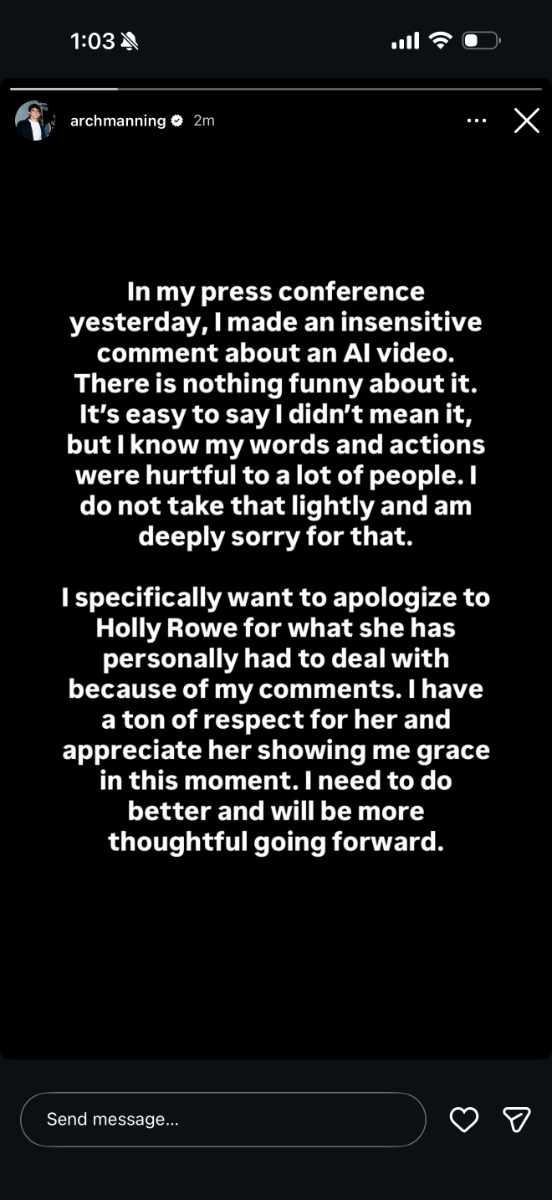


Important Information
We have placed cookies on your device to help make this website better. You can adjust your cookie settings, otherwise we'll assume you're okay to continue.
Account
Navigation
Search
Configure browser push notifications
Chrome (Android)
- Tap the lock icon next to the address bar.
- Tap Permissions → Notifications.
- Adjust your preference.
Chrome (Desktop)
- Click the padlock icon in the address bar.
- Select Site settings.
- Find Notifications and adjust your preference.
Safari (iOS 16.4+)
- Ensure the site is installed via Add to Home Screen.
- Open Settings App → Notifications.
- Find your app name and adjust your preference.
Safari (macOS)
- Go to Safari → Preferences.
- Click the Websites tab.
- Select Notifications in the sidebar.
- Find this website and adjust your preference.
Edge (Android)
- Tap the lock icon next to the address bar.
- Tap Permissions.
- Find Notifications and adjust your preference.
Edge (Desktop)
- Click the padlock icon in the address bar.
- Click Permissions for this site.
- Find Notifications and adjust your preference.
Firefox (Android)
- Go to Settings → Site permissions.
- Tap Notifications.
- Find this site in the list and adjust your preference.
Firefox (Desktop)
- Open Firefox Settings.
- Search for Notifications.
- Find this site in the list and adjust your preference.