
Buck Travis
-
Posts
273 -
Joined
-
Last visited
About Buck Travis

Buck Travis's Achievements






-
The Myth of "SEC Bias" in the AP Poll
Buck Travis replied to AustinsTruth's topic in On Texas Football Forum
There were SEC bias charges associated with the BCS rankings also. Mathematically, those teams playing other ranked teams (higher in the first poll of the season) carried a weighting through the season. So ranked SEC teams playing each other supported all SEC teams being ranked higher. A comparison of SEC vs non-conference records across the 10 years prior to the BCS and into the BCS era shows that the SEC was basically 50-50 against non-conference competition for the 90's-2000's. But SEC teams dominated BCS playoffs. However, the SEC didn't consistently dominate NC in any decades prior to the BCS. The distribution of NCs across major conferences was pretty even from the 60's-90's. Was the 2000's dominance because SEC teams were all ranked higher together in early polls? Was is purely coincidence that the founding chairman of the BCS, Roy Kramer, was the former SEC commissioner? Then the gravitational pull of BCS performance started impacting recruiting? People always charged ND and Penn State bias from the eastern sports media during the bowl era. As a Texas fan in the 70's and 80's that was obviously true. -
Christmas Day: Texas vs ou sucks fan thread
Buck Travis replied to MBHORNSFAN's topic in On Texas Football Forum
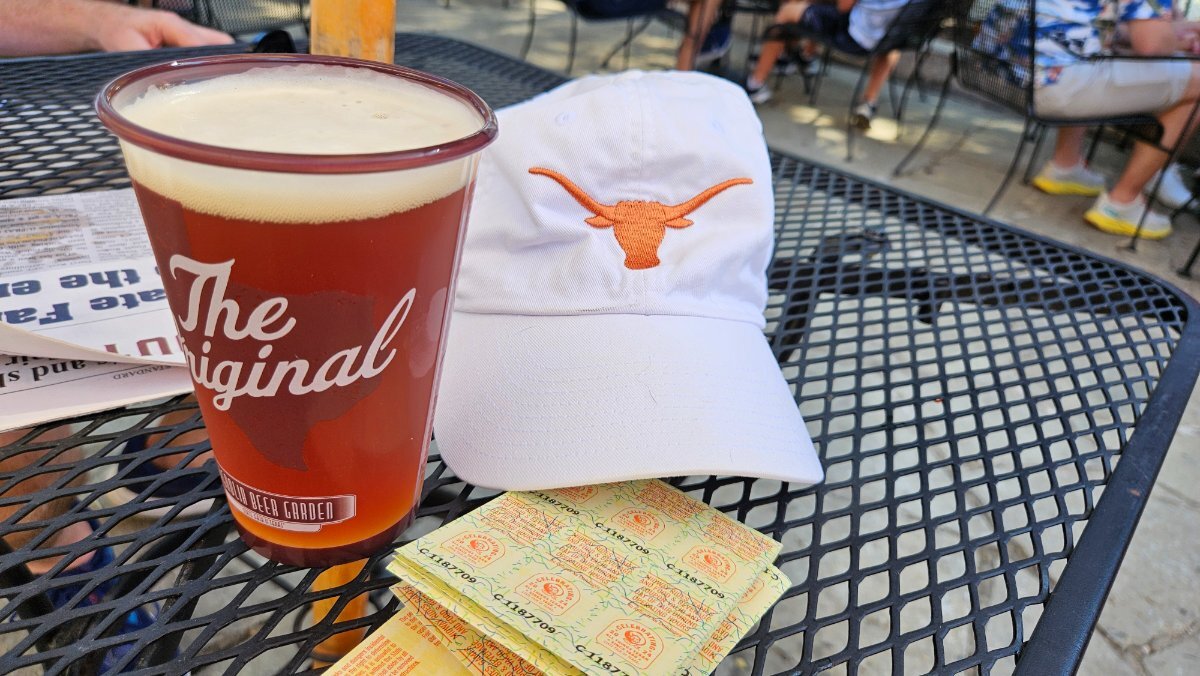
We frequent the beer gardens. Anything with a tree to sit under.
-
Tennessee prediction thread -- guess and you win!
Buck Travis replied to Hank South's topic in On Texas Football Forum
30-24 Texas -
While we're at it, I want to understand why Texas Road LLC has created all the traffic problems in Austin.
-
I miss getting the big envelope with thick shiny tickets. And walking to Fair Park at 9am with $300 cash in my pocket knowing that I'd find something on the north side of the Cotton Bowl.
-
Texas Players Making Their Debut…
Buck Travis replied to McTexas7's topic in On Texas Football Forum
I want to see pace and timing in the offensive backfield. Crisp handoffs, backs picking up the blitz, speed going outside and between the tackles. Aggressive confidence from the RBs. -
The closer CFB gets to Triple A baseball the less interested I will be in watching. https://www.espn.com/college-football/story/_/id/49441655/stanford-football-players-join-push-collective-bargaining
-
For those who like to geek out on teaching hitting technique, here you go: Amber Freeman shares practical hitting drills primarily through The Art of Coaching Softball (where she contributed content around 2020 while at Vanguard University) and coaching education platforms like Coaches Insider. Her drills align with her philosophy of simplifying swings, generating power through proper mechanics (especially extension), building individualized plans, and understanding swing planes.Here are the main hitting drills directly associated with her: 1. Extension Drill (Her Daily Staple) Purpose: Develop full arm extension through contact for maximum power and to drive the ball to the gaps or over the fence. Freeman emphasizes that “extension is power” and calls this a hitting staple she uses with athletes every single day. How to perform (based on her video demonstration): Hitter starts in their normal stance and goes through their full swing sequence/load/stride/rotation as usual. Instead of following through completely, stop/freeze at the point of full extension right after contact. At the freeze point, the barrel should be pointing directly at the pitcher (or straight ahead through the hitting zone). Focus on staying long through the ball rather than cutting the swing short. Repeat for reps, emphasizing controlled power and proper sequencing. Key coaching points from Freeman: Getting to full extension helps hitters develop power. It counters the misconception that a big, loopy swing is needed for distance—simpler, extended mechanics work better.Where to see it: Search Facebook for “Extension Drill - The Art of Coaching Softball” (video posted March 2020 with Freeman demonstrating). 2. Swing Planes Drill / Awareness (Uppercut vs. Flat) Purpose: Help hitters understand and optimize their natural swing plane to match pitch locations and maximize contact/power.Key concepts Freeman teaches: There are uppercut swingers and flat swingers. Uppercut swingers generally perform better on pitches down in the zone. Flat swingers generally perform better on pitches up in the zone. The goal is to stay in the right plane for the situation rather than forcing one style. She demonstrates with video examples and explains specific hitting drills tailored to each type of swinger to reinforce the correct plane.How it’s typically practiced: Hitters take swings (tee, soft toss, or machine) while focusing on plane awareness. Coaches or hitters analyze whether the swing is naturally uppercutting or flattening out. Drills adjust hand path, launch angle, or contact point to reinforce the desired plane for different pitch heights/locations. Where to see it: Search “Understanding Swing Planes with Amber Freeman” on Coaches Insider or Instagram (softballcoachesinsider account). It includes video breakdown and drill recommendations. 3. Separation Drill (Swing Breakdown) Purpose: Isolate and strengthen the early phases of the swing, particularly engaging the backside (loading/separation) before the front side fires. This helps hitters feel proper sequencing and prevents front-side dominance.How it works (from descriptions in the same coaching series): Break the swing into phases. Focus on the load/separation portion: Create separation between the upper and lower body, engaging the back hip/shoulder while keeping the front side quiet initially. Hitters often start with a paused or controlled movement to feel the backside leading the swing. Progress to full swings or live reps while maintaining that feel. Freeman breaks down the swing this way to help hitters understand and own each part of their mechanics. Where to see it: Related content appears in The Art of Coaching Softball videos (search “Separation hitting drill” on their Facebook page). Additional Methods from Freeman’s Approach While not always named “drills,” these are core to her hitting instruction (drawn from her interviews and success developing power hitters like Sydney Stewart): Machine Work (eHack or similar): Program specific pitchers into hitting machines and take full at-bats. This builds pitch recognition and approach in a controlled environment. Zone/Targeting Work: Identify each hitter’s strengths/weaknesses and “particular zone.” Practice hunting pitches in their hot zones with a specific plan (count leverage, pitch selection). Simplified Mechanics Reps: Focus on clean, repeatable swings rather than complex movements—especially for power hitters. These drills and methods contributed to major offensive improvements at Arizona (top Big 12 offense with multiple high-average/power hitters). Tips for implementation: Start with the Extension Drill daily—it’s simple, effective, and reinforces power. Film swings to check planes and extension. Individualize: Not every hitter needs the same emphasis (e.g., power hitters vs. slap hitters). Most of Freeman’s content is video-based for visual learning. Search the titles above on Facebook, Instagram, or Coaches Insider for the demonstrations. Her content is also part of broader The Art of Coaching Softball libraries (some behind membership).
-
2026 Women's Softball Thread
Buck Travis replied to LonghornFan4Ever's topic in On Texas Football Forum
With the new five year rule the 2028 pitching staff could look a lot like this. Including the Back To Back headline. -
I just bought season tickets on stubhub for $2200/per including fees. Section 8. You can buy a parking pass there if you need to.
-
2026 Women's Softball Thread
Buck Travis replied to LonghornFan4Ever's topic in On Texas Football Forum
Nice interview with Kayden Henry and her mom. -
If I have to watch Switzer, Stoops, and Mateer celebrate a NC in Omaha I'm going to break something.
-
Doty can hit also. https://www.facebook.com/reel/1547110696811557/?app=fbl
-
So yeah, Kirby is there.
-